

If you're running Google Ads in 2026, you've probably logged in and thought: "Wait, something's different here.”
You're not wrong. Google didn't announce a big redesign, but they quietly reorganized the entire interface around AI tools, creative management, and full-funnel measurement. Some features moved. New hubs appeared. And if you're not paying attention, you're missing tools that could actually move the needle.
The changes reflect a bigger shift: search behavior is evolving, AI is disrupting how people research, and the old playbook isn't enough anymore. Let's break down what actually changed in the interface, where Google shifted things, and which new features matter in 2026.
Why 2026 Feels Different
Search behavior is changing fast.
People are increasingly leaning on AI tools like ChatGPT, Google’s AI experiences, and ad advisors to do their research. That means fewer traditional searches, fewer clicks, and more competition for the searches that still show strong buying intent.
If you think you're imagining the drop in clicks, you're not. Search Engine Land tracked CTR falling 61% for organic and 68% for paid since AI Overviews launched. Informational searches dominate, while high-intent clicks, the ones worth paying for, are getting scarcer and more expensive.
If your business is just chasing clicks, you’re going to struggle. But the foundation hasn’t changed: relevance still wins. Ads that clearly match user intent and promote a proven offer continue to perform, even in a more competitive environment. Think of it like this: AI is doing a lot of the research for your potential customers. If your campaign isn’t optimized for that, you’re invisible.
What’s New in the Google Ads Interface
Performance Insights Are Deeper and More Actionable
Performance reporting now breaks down across eight channels: Shopping, Search, Display, YouTube, Gmail, Discover, Maps, and Partners. Translation? You can finally see where your conversions are actually coming from, especially for video campaigns where YouTube and Display Network performance were always a black box.
The upgrade isn't just more numbers. You get:
Expanded performance metrics
Asset level and channel level visibility
AI-driven recommendations surfaced closer to key decision points
This is especially noticeable in Performance Max, where reporting helps explain why performance is changing, not just what happened.
YouTube & Demand Gen: Measuring Brand Impact
Google is rolling out Attributed Brand Searches, which will show whether users search for your brand after viewing video ads.
Even if video doesn’t drive immediate conversions, you’ll be able to see its downstream impact on branded search behavior.
AI Chatbots Are Everywhere Now
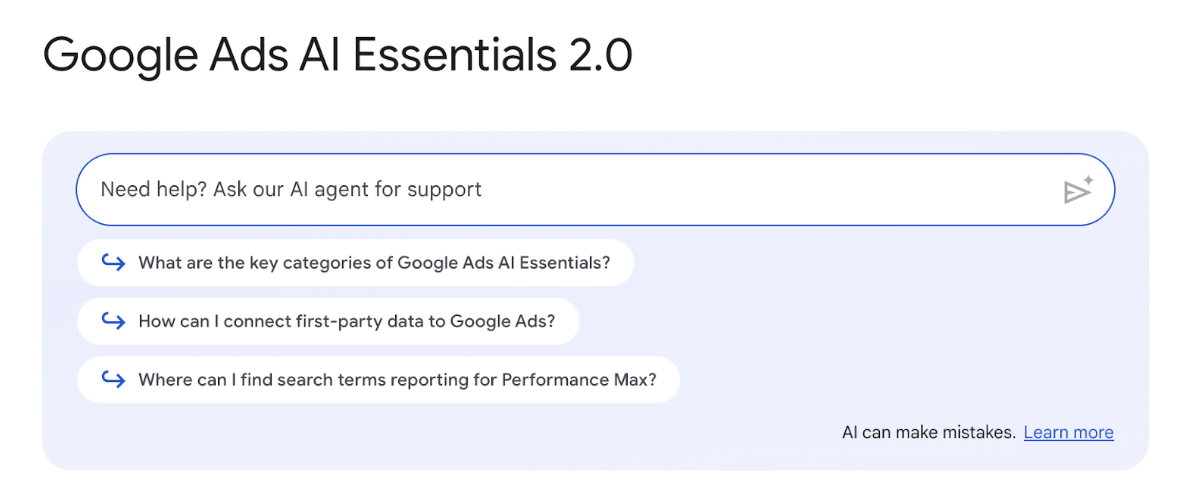
Google went all-in on AI chatbots. Both Google Ads and Analytics now have chat assistants that surface insights and recommendations. They're helpful, but they don't take action, you still have to do the work.
The bigger shift? Support. The direct support form is gone, replaced with an AI chatbot that fields all inquiries first. Human reps still exist, but good luck getting past the bot without going through its troubleshooting routine first.
Creator and Video Tools Have Their Own Space
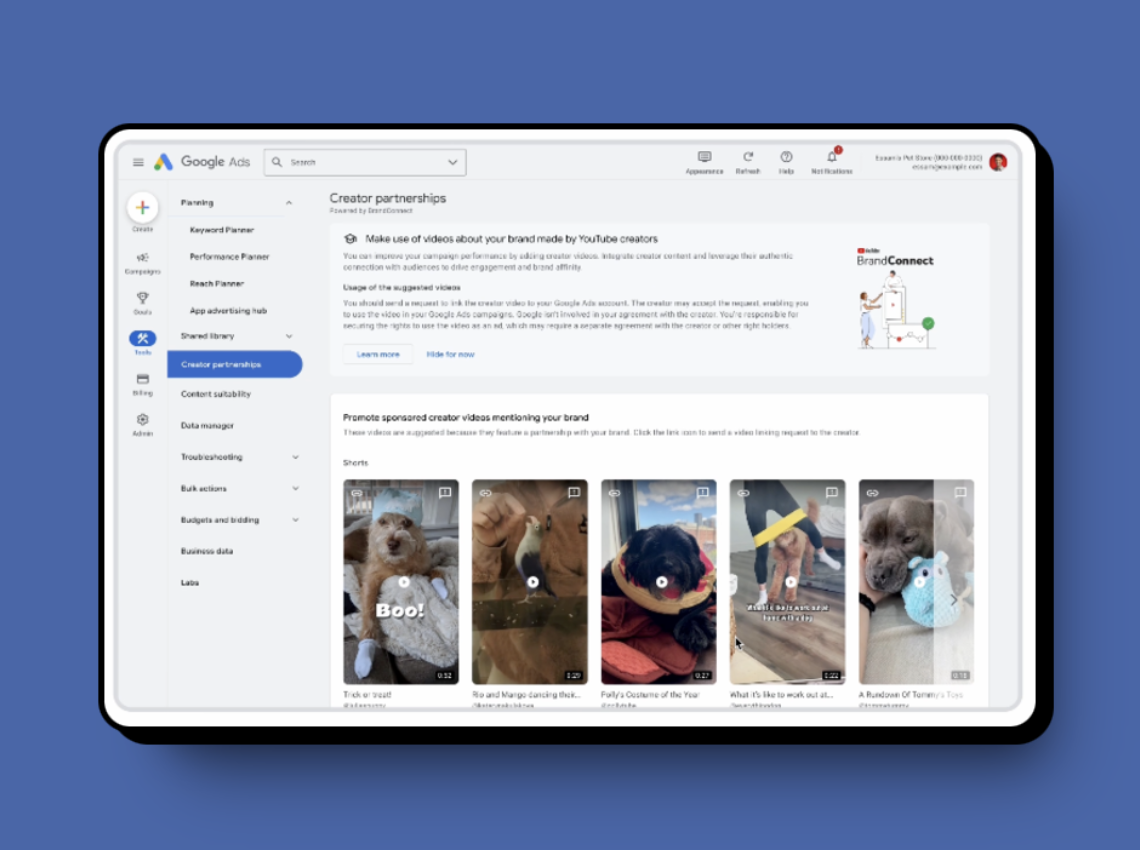
Video just got its own hub. The Creator Partnership Hub gives advertisers a dedicated place to:
Discover YouTube creators
Explore creator led video content
Align video strategy with Demand Gen and YouTube campaigns
This isn't subtle: video and creative aren't optional anymore. They're core to performance.
What This Means for Your 2026 Strategy
The interface updates point to where Google thinks the game is headed. Here's what to prioritize:
Use channel-level reporting: Performance Max finally shows you which channels drive results. Stop guessing, start optimizing based on actual data.
Set up brand search tracking: If you're running video, use Attributed Brand Searches to prove video's impact beyond direct conversions.
Get serious about video creative: Google built a whole Creator Partnership Hub. That's not a hint, it's a directive. Video isn't supplemental anymore.
Adapt to AI search behavior: Fewer clicks, higher CPCs, more AI-driven research. Your campaigns need to show up in AI results, not just traditional search.
Track the full funnel: With longer conversion paths and AI doing the research, you can't just measure last click anymore.
Revel Marketing Partner’s Bottom Line
2026 isn't about learning a new interface. It's about adapting to how people actually search now, with AI doing the heavy lifting and fewer clicks to go around.
The advertisers who invest in video, use the new reporting tools, and optimize for AI-driven search will win. Everyone else will wonder why their CPCs keep climbing while results stagnate.
SOURCES
Google Ads: Introducing Channel-Level Reporting for Performance Max campaigns
Search Engine Land: Google AI Overviews drive 61% drop in organic CTR, 68% in paid
Search Engine Land: Google Ads adds ‘Branded Searches’ as new conversion metric
PPC News Feed: Google Ads Replaces Support Form With AI Chatbot
This blog was edited with the help of Claude AI.